


Matthew Tesov
Nice to Meet You!
A sommelier and wine expert with over seven years of experience in the wine industry, founder of Wine Academy, and author of courses that combine professional depth of knowledge with a relaxed, friendly atmosphere. Known simply as Matthew to his friends, he opens the door to the world of wine in such a way that every lecture or tasting becomes an exciting journey through aromas, flavors, and stories.
Why Does the Same Wine Taste Different in Different Glasses
You open a familiar wine and expect the taste you know, but the first sip suddenly changes the whole impression. The wine seems sharper or, on the contrary, softer and rounder. It feels as if the bottle itself has changed. In reality, the reason is much more subtle: the way the wine is served has changed and so has the way you perceive it.
How the shape of a glass changes the taste
Wine, like any other product, is perceived not only by the receptors on the tongue. Up to 80% of our impression of food is formed by aroma. When it comes to wine, aroma depends on how the drink behaves in the glass. The shape of the bowl affects the concentration of aromas, while the rim of the glass influences how the wine reaches different areas of the tongue.
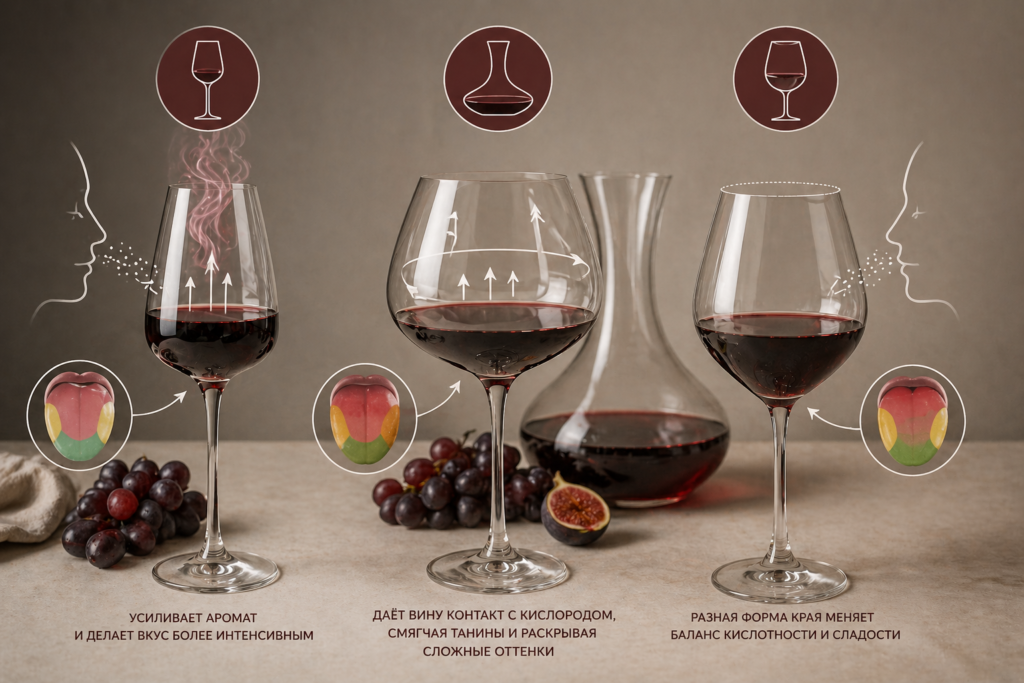
A wine glass performs several tasks at once:
- a narrow glass enhances the aroma and makes the taste more intense;
- a wider bowl gives the wine contact with oxygen, softening the tannins and revealing more complex notes;
- different rim shapes change the balance of acidity and sweetness.
That is why the same wine can seem fresh and bright or, on the contrary, calm and rounded.
Why the same grape variety “sounds” different depending on the glass
Different areas of the tongue perceive taste in different ways: acidity feels brighter on the sides, sweetness on the tip, and bitterness closer to the back. When the shape of the glass changes the flow of the wine, the balance also changes.
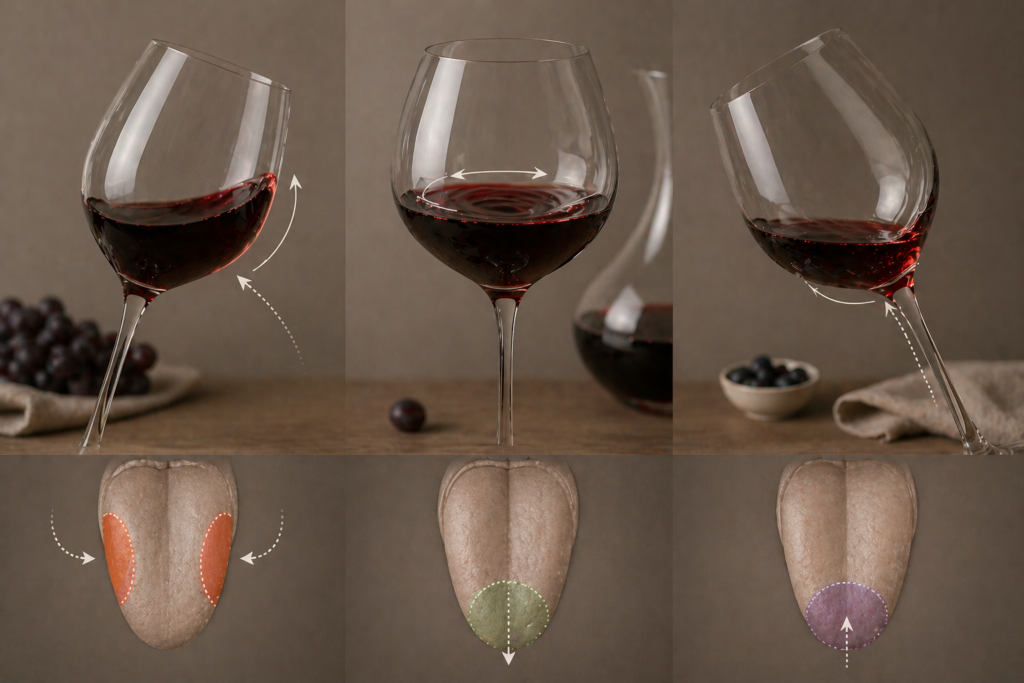
For example, in a narrow glass, white wine may seem fresher and more acidic because the flow is directed toward the more sensitive areas. In a wider glass, the same notes become smoother, while texture and fruitiness come to the front.
With red wines, the effect is even more noticeable. With enough aeration, tannins become softer and the aroma becomes deeper. Without it, the wine may seem “closed” and harsh.
Why you need a decanter
If the glass is responsible for serving, the decanter is responsible for preparing the wine. It is a vessel with a wide base, where the wine comes into active contact with air. Aeration softens tannins, opens up the aroma, and helps the wine wake up, especially when it comes to young, full-bodied reds or wines with a pronounced structure.
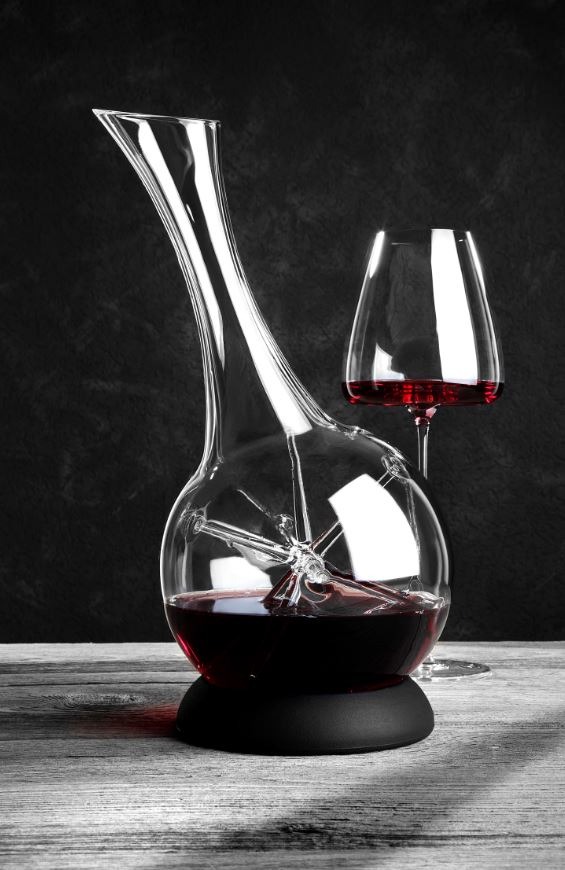
A decanter also has a second function: separating sediment. In aged wines, natural deposits form over time, and careful decanting helps keep the taste in the glass clean.
The shape of the decanter also affects the taste: the wider the base, the more active the aeration. For young wines, models with a large surface area for contact with air are usually chosen. For aged wines, more delicate shapes are used to open the wine more gently.
On our website, you can purchase professional glasses and decanters that we use ourselves during tastings and recommend to academy students. We selected the range so that every item truly works for the taste of wine.
How to choose a wine glass
You do not need to aim for a perfect collection. It is enough to understand the logic:
- red wines need space, so it is better to choose larger bowls;
- white wines benefit from a more compact shape that preserves freshness;
- sparkling wines need a narrow glass to hold the bubbles and aroma.
In this way, the same grape variety can open up differently depending on the shape of the glass, and this is where a deeper understanding of wine begins. Such differences are hard to notice intuitively – you need to explore them systematically once and try them in practice.
A separate lesson in the Matthew Wine & Spirit Academy wine course is dedicated to this topic. It helps you understand how to manage taste through the choice of glass and get the most out of every wine.
Because sometimes the difference between “ordinary” and “truly delicious” is simply the right glass.
Content: