
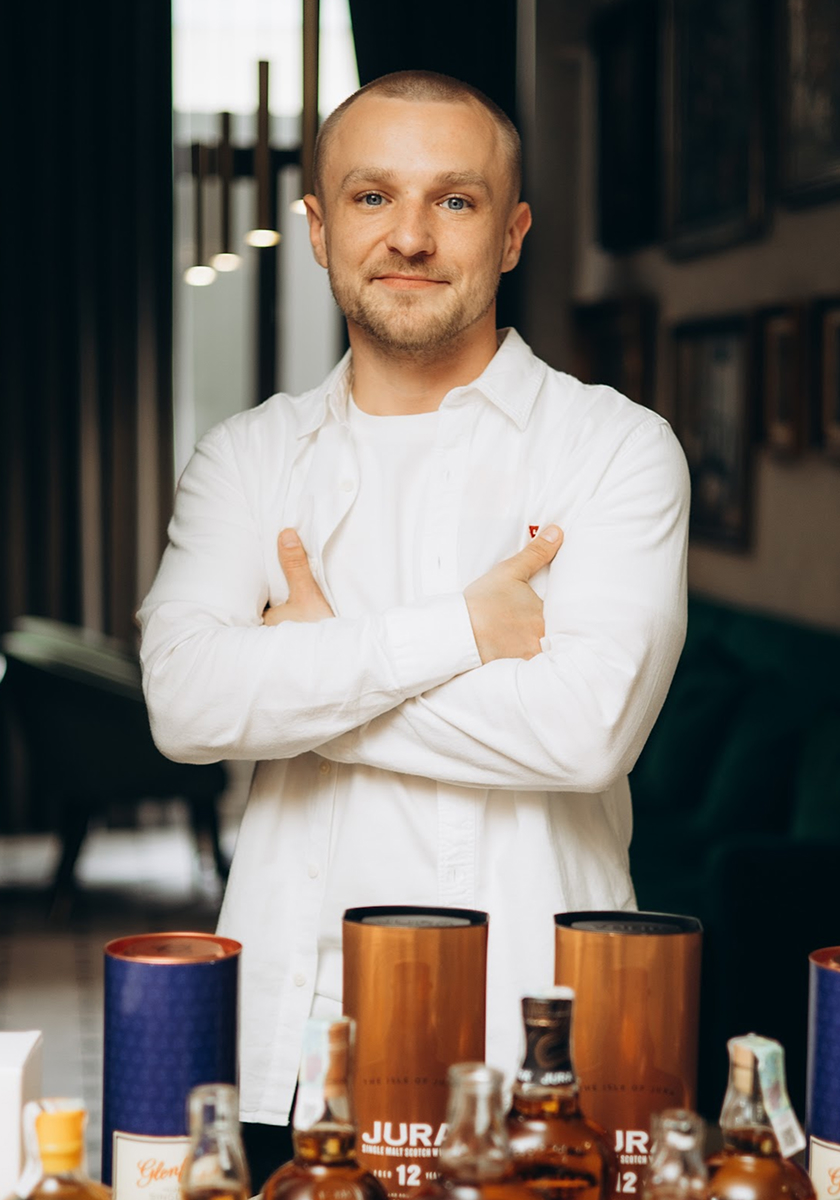
Matthew Tesov
Nice to Meet You!
A sommelier and wine expert with over seven years of experience in the wine industry, founder of Wine Academy, and author of courses that combine professional depth of knowledge with a relaxed, friendly atmosphere. Known simply as Matthew to his friends, he opens the door to the world of wine in such a way that every lecture or tasting becomes an exciting journey through aromas, flavors, and stories.
Is It Possible to Become a Sommelier “for Yourself” Rather Than for Work
There is a question people often ask a little shyly, as if they already expect not to be understood. It sounds something like this: “I do not want to work in a restaurant and I am not planning to change my profession. But I am very interested in wine. Does it make sense to study it seriously?” The short answer is yes – and there are far more good reasons for this than it may seem at first glance.
Why study something that does not make you money?
We live in a culture where education is usually seen only as an investment in a career. You study, get a job, and earn back what you invested. Anything outside this logic automatically seems optional or even frivolous.
But look at any serious hobby. People learn to play the guitar without planning to perform on stage. They take painting lessons without intending to sell their work. They study cooking at a professional level, even though they have no plans to open a restaurant. No one asks them “why?”, because it is obvious: deep knowledge of something you love has value in itself.
A person who understands wine at the level of a sommelier gets much more than just the ability to choose a bottle for dinner. They gain a new way of seeing the world: through geography, history, climate, culture, and chemistry at the same time. Wine is one of the few fields where every new bottle is literally learning material.
What deep wine knowledge gives you in everyday life

Abstract ideas about a “new level of perception” do not convince everyone, so let’s look at the real changes that happen after wine education:
- A trained taster can find excellent wines in the mid-price segment, understand exactly what they are paying for in an expensive bottle, and make a conscious choice.
- Wine knowledge opens a completely different layer of travel across Europe, South America, or South Africa. It is the story of terroir, centuries-old winemaking traditions, and specific people and families who make wine in their own way.
- A well-chosen wine and food pairing is not snobbery or restaurant luxury. It truly changes the taste of both the dish and the wine.
- The ability to choose a bottle as a gift, keep up a conversation at a tasting, and explain to guests what exactly is on the table and why adds confidence and creates the image of a person with taste.
Each of these effects appears gradually, as knowledge and practice build up. But together, they are exactly what makes wine education meaningful even without a professional goal.
How learning “for yourself” differs from the professional path
It is important to understand that sommelier education is not one single fixed thing. There are different levels, formats, and goals, and the right choice depends on why you are studying.
A professional sommelier studies winemaking theory, classifications, service, supplier relations, wine list management, and guest interaction. This is a large amount of specific knowledge needed for working in the industry.
A person who studies for themselves needs something different. They need to understand the logic of tasting, learn the key regions and grape varieties, know how to pair wine with food, and feel confident in a wine shop or when reading a wine list. This knowledge can be gained through beginner and intermediate-level courses.
This is exactly why online sommelier courses exist: they provide a real knowledge base in a convenient format, without tying you to a restaurant career.
Wine is one of those fields where knowledge and pleasure strengthen each other. The more you understand, the more you get from every glass. And you absolutely do not need to work as a sommelier for that. You only need to truly want to understand it.
Content: