
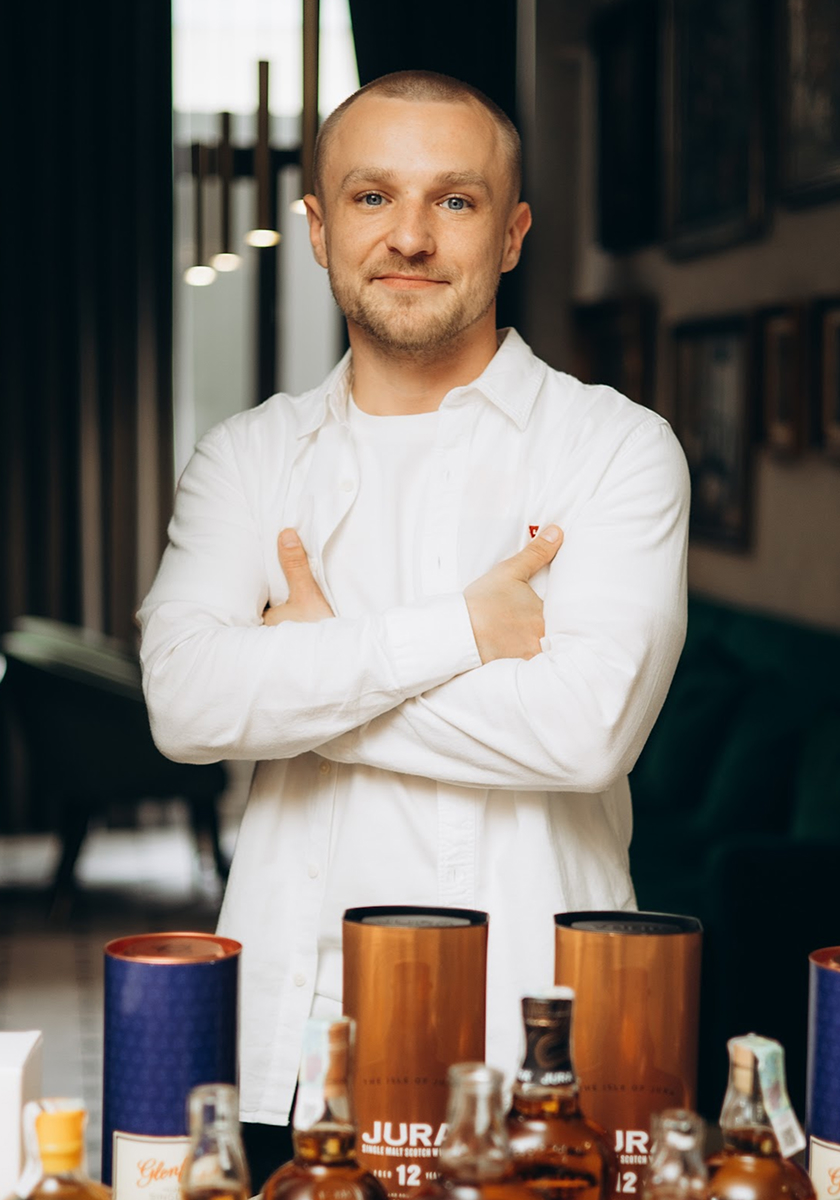
Matthew Tesov
Nice to Meet You!
A sommelier and wine expert with over seven years of experience in the wine industry, founder of Wine Academy, and author of courses that combine professional depth of knowledge with a relaxed, friendly atmosphere. Known simply as Matthew to his friends, he opens the door to the world of wine in such a way that every lecture or tasting becomes an exciting journey through aromas, flavors, and stories.
Wine Tasting: How to Learn to Distinguish Flavors and Whether You Need to Take a Wine Tasting Course
Why do some people detect notes of berries, spices, and chocolate in wine, while others simply describe it as “red” or “white”? This question comes to mind for almost everyone who tries wine tasting for the first time.
At first glance, it seems like something complicated and accessible only to sommeliers or wine snobs. There are so many terms, nuances, and unfamiliar descriptions of flavors. Because of this, it’s easy to think that it’s impossible to understand wine without preparation. Especially if you want to learn how to taste wine, not just drink it.
However, in practice, it’s simpler than it seems. Wine tasting is a skill that can be developed and refined.
In this article, we’ll explore how wine tasting works, where to start, and whether it’s worth taking wine tasting courses.
What Is Wine Tasting and Why Is It Important
People have been classifying wine ever since the dawn of winemaking. The ancient Greeks and Romans selected the finest vintages for important occasions and trade. Later, this process became more formalized. In the 14th century, taste cups were used to check color and clarity. In the 20th century, rating systems emerged, and wine tasting became part of the sommelier’s profession.
Wine tasting refers to a systematic analysis of the beverage. First, its appearance is evaluated: color, clarity, and density. Then the aroma – how it unfolds, whether it contains fruit, spices, or woody notes. After that, the taste: the balance of acidity, sweetness, and tannins, as well as the structure. And finally, the aftertaste, which often reveals more about the quality than the first sip.
This approach changes the very perception of wine. Where there used to be simply “dry” or “sour,” distinctions emerge: light or dense, fresh or aged, simple or complex.
Systematic wine tasting allows you to:
- identify spoiled wine;
- effortlessly pair the right dishes with wine;
- monitor the future quality of bottled wine;
- select wines for the menu;
- simplify wine shopping at the store.
As a result, you’ll have a clear understanding of what you’re drinking and why you’re choosing that particular wine.
How Wine Tasting Works: The Main Steps
No matter which sommelier you end up with at a wine tasting, the process will be essentially the same. As a rule, professionals follow the same procedure. It includes: visual assessment, smell, taste, and aftertaste. Let’s take a closer look at these steps.
Visual assessment
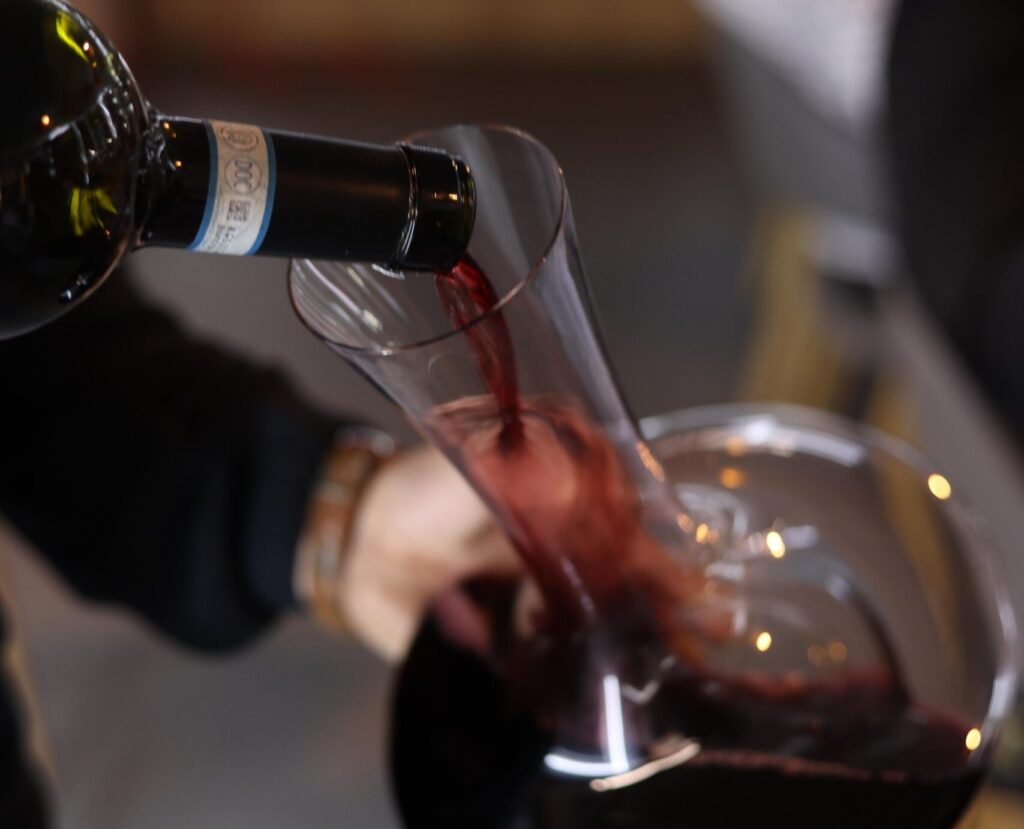
The first thing they do with the wine is look at it, not drink it. The glass is raised to eye level or tilted over a white surface – a tablecloth or a sheet of paper.
Attention is paid to:
- Color and intensity. A young Cabernet Sauvignon is purple and dense. The same Cabernet, but after ten years of aging, takes on brick-red and garnet hues at the edges. White wines darken with age: from straw to golden and amber hues.
- Clarity. A quality wine should be clear. In aged wine, cloudiness in the form of sediment is acceptable, but in a young wine, it is a sign of a problem.
- “Legs” on the glass. Slow-flowing streaks after swirling the glass indicate a high alcohol and glycerin content, meaning a dense, full-bodied wine.
All of this takes no more than 15–20 seconds, but it already gives you a first impression of the wine even before the first sip.
Smell: The Aroma of Wine
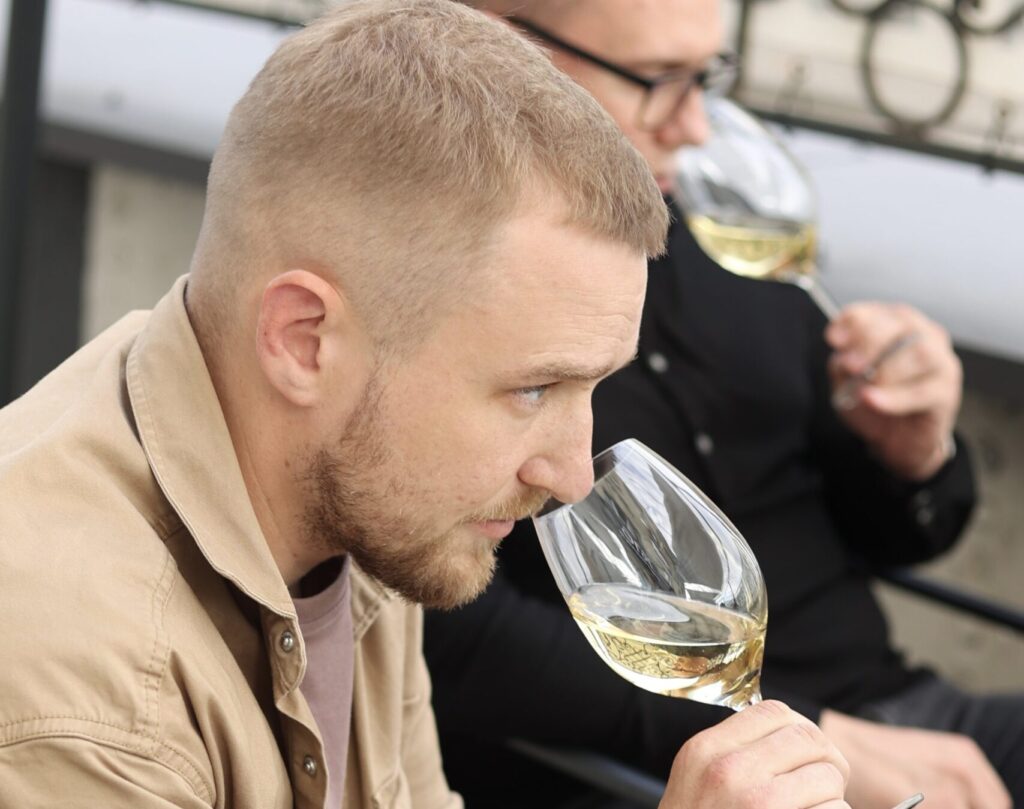
Humans can distinguish thousands of scents, whereas we have far fewer taste receptors. It is the nose that reveals a wine’s character.
The first step is to smell without swirling. Hold the glass to your nose and take a short, gentle breath. This is the so-called “closed nose” – the most volatile and delicate aromas, which evaporate first.
The second step – after swirling. Swirl the wine in the glass in a circular motion: this oxygenates it and reveals deeper aromas. Now take a deeper breath.
Aromas are typically divided into three groups:
- Primary – from the grapes themselves: fruit, flowers, herbs.
- Secondary – from fermentation: yeast, bread, cream (characteristic of wines with malolactic fermentation).
- Tertiary (bouquet) – from aging in oak or in the bottle: vanilla, tobacco, leather, spices, mushrooms, truffle.
Don’t rush to identify a specific aromatic descriptor. First, determine the overall impression: fruity or earthy, fresh or ripe, simple or complex.
Taste: What Happens in the Mouth
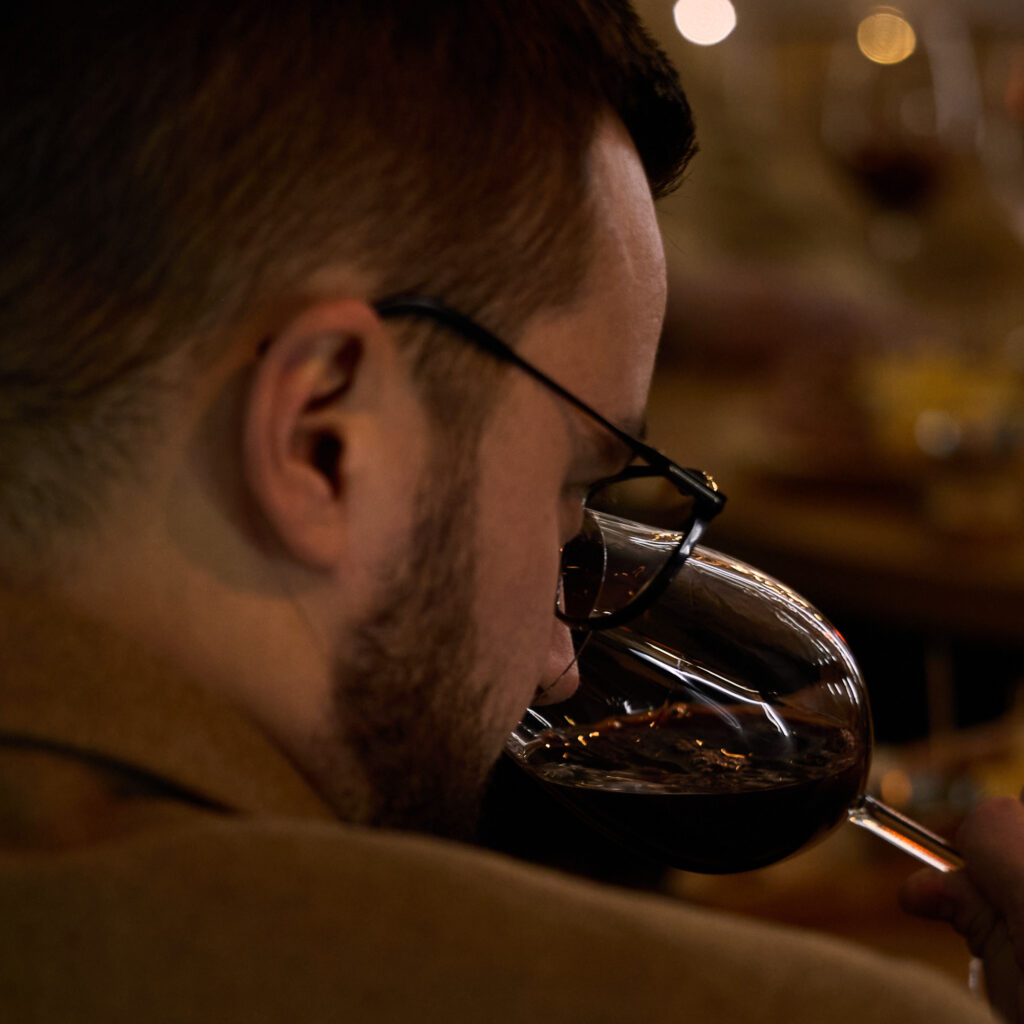
After taking a small sip, you should sort of “chew” the wine in your mouth. This means allowing it to coat the entire surface of your tongue. Some tasters gently draw air in through pursed lips to enhance the retronasal aromas.
Several parameters are evaluated simultaneously:
- Sweetness – felt on the tip of the tongue in the first few seconds. Most dry wines contain minimal residual sugar, but the ripeness of the fruit can create an illusion of sweetness.
- Acidity – felt on the sides of the tongue. High acidity makes the wine lively and food-friendly; low acidity makes it dull and flat.
- Tannins – found only in red wines. This is the same “astringent” sensation, like dryness on the gums and the inside of the cheeks.
- Alcohol – felt as warmth in the throat.
- Body – the overall density and weight of the wine in the mouth. It is compared to water (light), milk (medium), and cream (full-bodied).
It’s worth mentioning balance separately. This is the main hallmark of a good wine. When acidity, tannins, alcohol, and fruit coexist without any single element dominating – the wine is balanced. It is precisely this sense of harmony that distinguishes a quality wine from one that is simply strong or simply acidic.
Aftertaste
After you’ve swallowed (or spit out – which is what they do at professional tastings) the wine, the aromas and sensations linger.
The finish is measured in seconds. Short finish: up to 5 seconds. Medium: 5–15. Long: over 15.
Pay attention not only to the duration but also to the quality: is what remains pleasant? Is there any bitterness, sharpness, or metallic aftertaste?
Characteristics, patterns, familiar flavors and bouquets, as well as wine selections for practice—are all available in our wine tasting course “La Dilettante – Wine from Scratch” at Matthew Wine & Spirit Academy. Over ten lessons, we’ll explore the secrets of winemaking: how grape variety, climate, fermentation, and aging shape everything that ends up in your glass. You’ll begin to understand why wine is the way it is, and this will change your attitude toward every sip.
Wine Tasting Courses: When Are They Necessary?
Many wine enthusiasts try to figure out wine on their own – reading labels, trying different varieties, watching YouTube videos. This often works. But there’s always a limit to self-study: knowledge accumulates haphazardly, gaps go unnoticed, and at some point, you realize you’re going in circles with the same wines and the same sensations.
This is where wine tasting courses come in. The advantages of this approach:
- Systematic approach. The main thing that learning provides isn’t new facts, but structure.
- Practice. In courses, you taste wines side by side – it’s the comparison that builds your taste memory the fastest.
- Professional terminology. Not to look smart at a party, but to accurately describe what you’re tasting – and to understand what others mean.
Training to become a wine taster doesn’t necessarily mean a career as a sommelier. Most people take these courses simply because they want to drink wine mindfully – and get more enjoyment out of it.
Wine Tasting at Matthew Wine & Spirit Academy: Format and Highlights
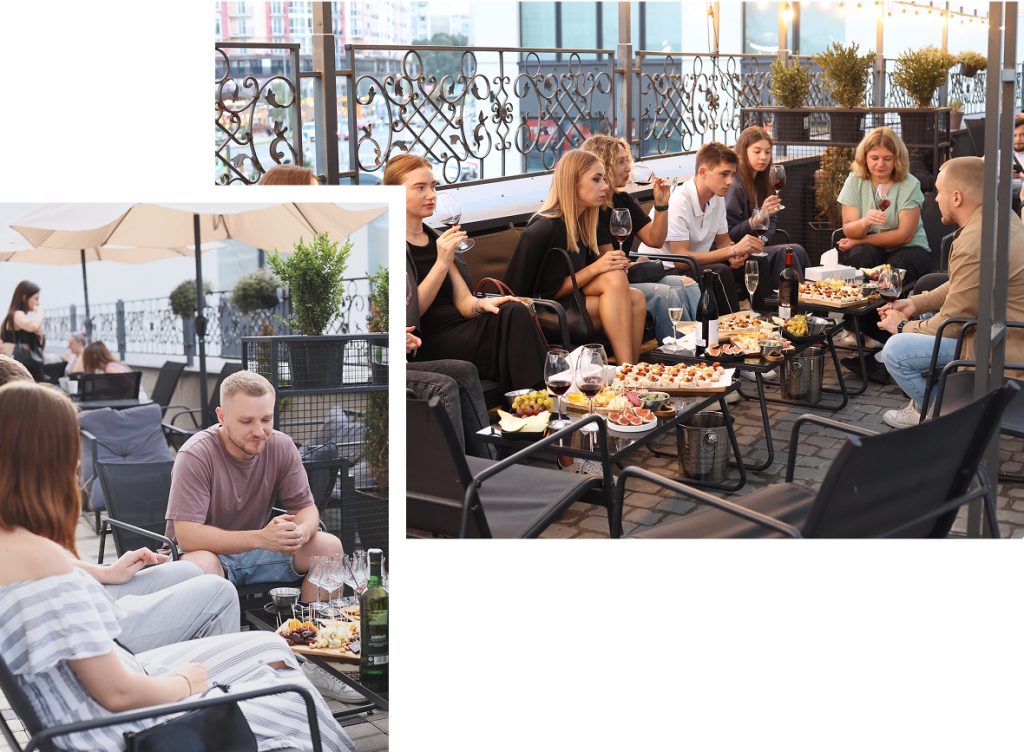
Wine tasting is a skill that is developed through practice. It cannot be mastered through theory alone: it is essential to taste, compare, and receive explanations on the spot.
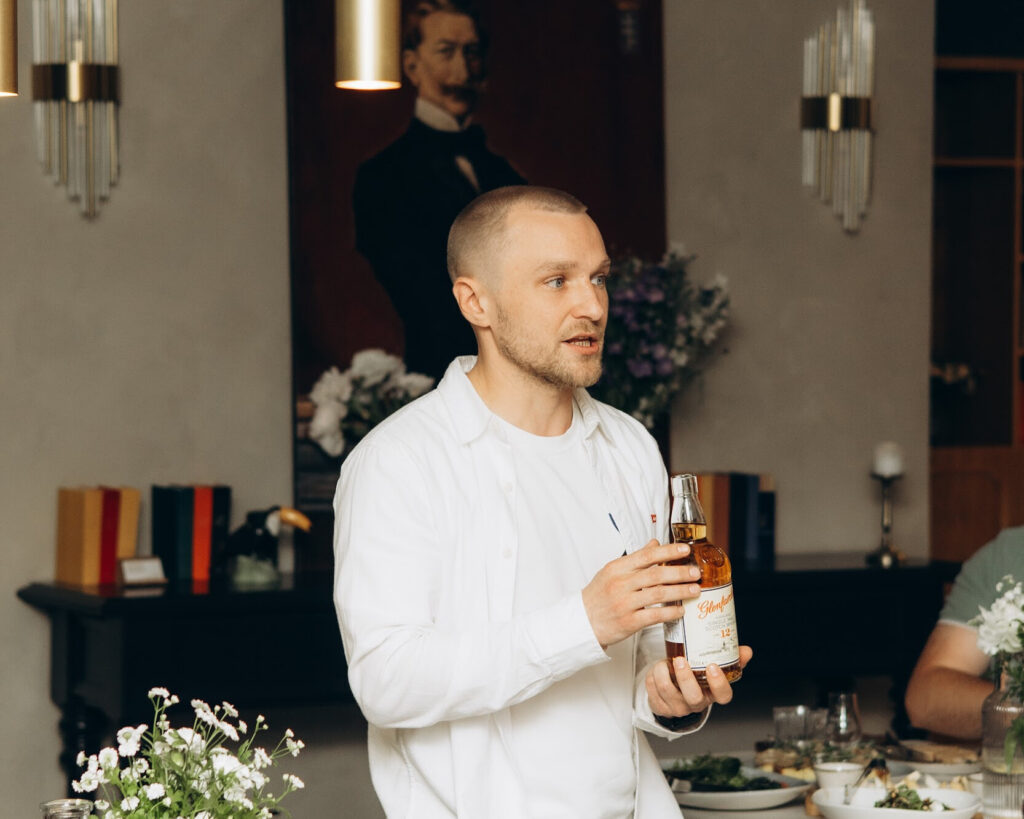
Each session at Matthew Wine & Spirit Academy features several wines selected by style or theme. For example, at the “Cava vs Crémant” evening, two sparkling wines were compared – a Spanish and a French one, made using the same method but with completely different characters in the glass. At an intimate Bordeaux evening, participants explored the “Bordeaux character,” the region’s history, and learned how to pair wines with food. During the tasting, the sommelier explains what to look for: how to identify aromas, how to evaluate flavors, and how wines differ from one another.
A special focus is placed on the atmosphere. This isn’t a formal lesson, but a hands-on experience where you can ask questions, discuss, and compare. We intentionally keep the groups small, so space is limited each time.
Our meetings take place in person in Khmelnytskyi. Announcements with dates and topics for upcoming evenings can be found on the school’s Telegram channel. And if you want to learn how to taste wine on your own, we invite you to take the beginner’s course “La Dilettante – Wine from Scratch”: 10 lessons, real wines, no theory for theory’s sake.
Taste wine with us – after all, we know everything there is to know about it!
Frequently Asked Questions
What is wine tasting?
It is the process of evaluating wine based on several criteria: appearance, aroma, taste, and finish. Unlike casual consumption, what matters here is not just the sensory experience, but an understanding of the wine’s structure – its balance, acidity, body, and character.
Can I learn to taste wine on my own?
Yes, you can, because basic skills are developed through practice: comparing different wines, noting your impressions, and paying attention to details. However, without knowledge and professional guidance from a sommelier, it is more difficult to interpret the taste and aroma.
How long does a wine tasting last?
Typically, 1 to 2 hours. This is enough time to analyze several samples.
How do I know if I need wine tasting courses?
Focus on your goal. If you’re simply choosing wine for yourself and want to better understand the drink’s taste, independent practice is enough. If, however, you want to understand different styles, confidently describe wine, distinguish nuances, and not get lost in the selection, then you should learn to taste wine professionally.
Content: