
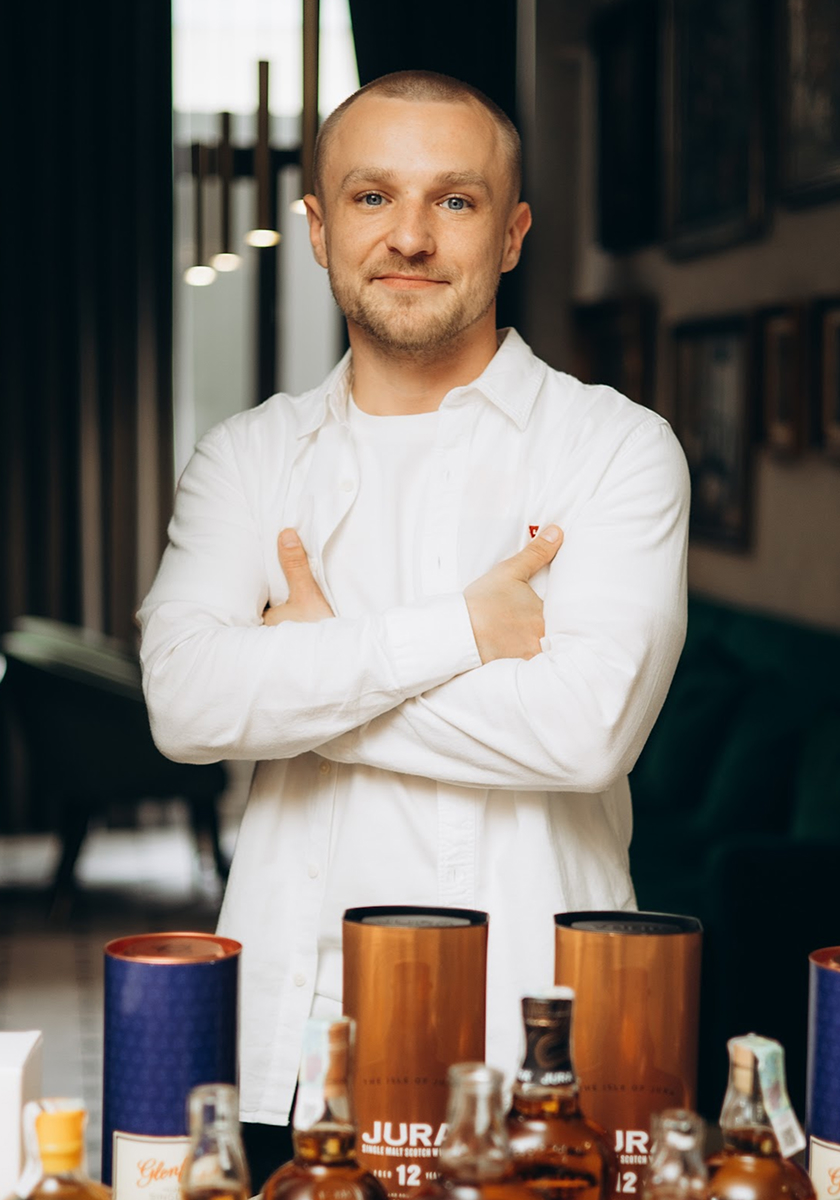
Matthew Tesov
Nice to Meet You!
A sommelier and wine expert with over seven years of experience in the wine industry, founder of Wine Academy, and author of courses that combine professional depth of knowledge with a relaxed, friendly atmosphere. Known simply as Matthew to his friends, he opens the door to the world of wine in such a way that every lecture or tasting becomes an exciting journey through aromas, flavors, and stories.
Why YouTube Videos Will Never Replace Wine School
You turn on another review from a popular wine blogger. They skillfully swirl the glass, close their eyes, and passionately talk about notes of forest floor, white truffle, and ripe blackberry. It sounds incredibly convincing and beautiful.
But when you buy that same bottle and pour the wine, all you feel is tartness and acidity. Of course, disappointment appears immediately. It seems like your receptors simply were not made for high-level tasting. However, the problem lies somewhere else entirely. A smartphone screen simply cannot convey the most important thing.
Video reviews or practice: why theory will not teach you to taste wine
YouTube videos create a very pleasant illusion of quick learning. Of course, bloggers can give you a fairly good general foundation. You can easily learn the Bordeaux classification or memorize all the stages of Champagne production. But dry theory without the right methodology does not work in the wine world.
A blogger speaks in a monologue, focusing on their own impressions. You simply memorize their words, but you do not understand the mechanism behind how exactly they found the aroma of violet or green pepper in the glass.
Unfortunately, you are only watching someone else taste wine. As a result, without a clear algorithm and an understanding of the basic chemistry of wine, this experience is completely impossible to repeat on your own at home.
Advantages of the live format: what professional wine courses offer
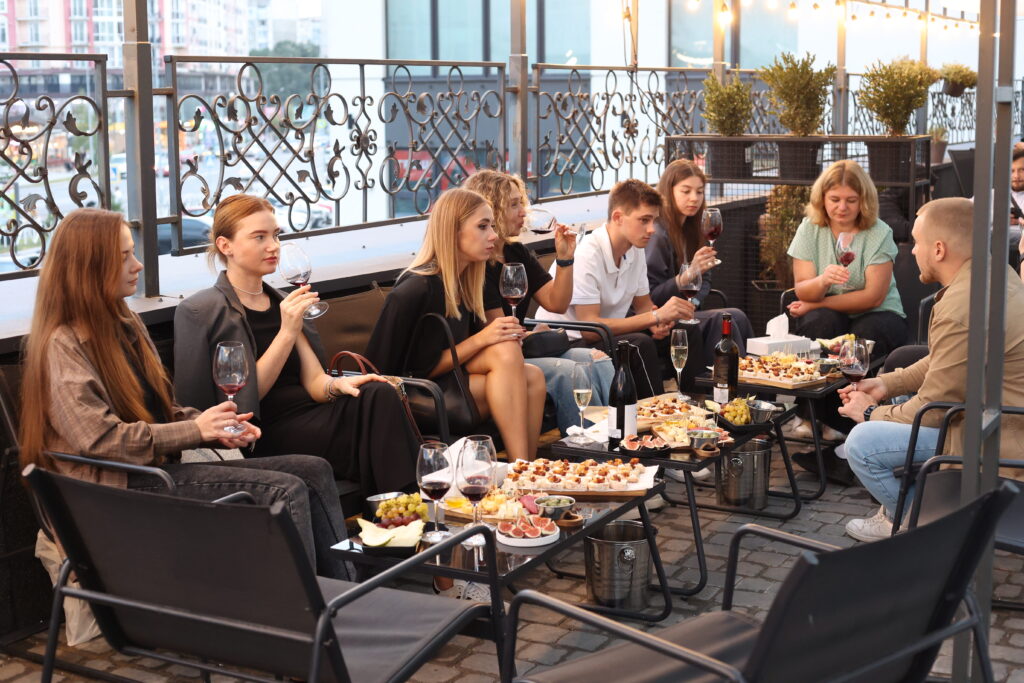
The second critical drawback of YouTube is the lack of structure. The platform’s algorithms serve you videos chaotically, focusing only on clickability, not on your real progress.
Professional training, on the other hand, whether it takes place in a classroom or in a convenient online format, is always built around a clear academic program.
Here are the key differences of the right approach:
- Gradual complexity. You do not jump from basic white wines straight to complex vintages. The program guides you step by step, allowing your receptors to adapt and memorize the profiles of different varieties.
- Evaluation methodology. Experts teach you not just to fantasize about aromas, but to objectively analyze acidity, body, tannins, and balance according to international standards.
- Feedback. During professional training, you always have the opportunity to ask your curator questions, discuss your doubts, and calibrate your own sensations.
It is this interactive approach that turns scattered entertaining facts from the internet into real, solid tasting skills.
How to choose the right direction for growth
Of course, there is no need to completely give up watching interesting wine channels. They are great for broadening your horizons and inspiring new gastronomic discoveries. However, if you want to truly understand wine, freely navigate grape varieties, and confidently read labels, you need a solid foundation.
That is why modern sommelier schools will always remain the gold standard of education. There, you receive not just a set of beautiful facts, but practical working tools for independent and conscious tasting.
In the end, true mastery is born exactly where passive observation ends and systematic practice under the guidance of professionals begins.
Content: