
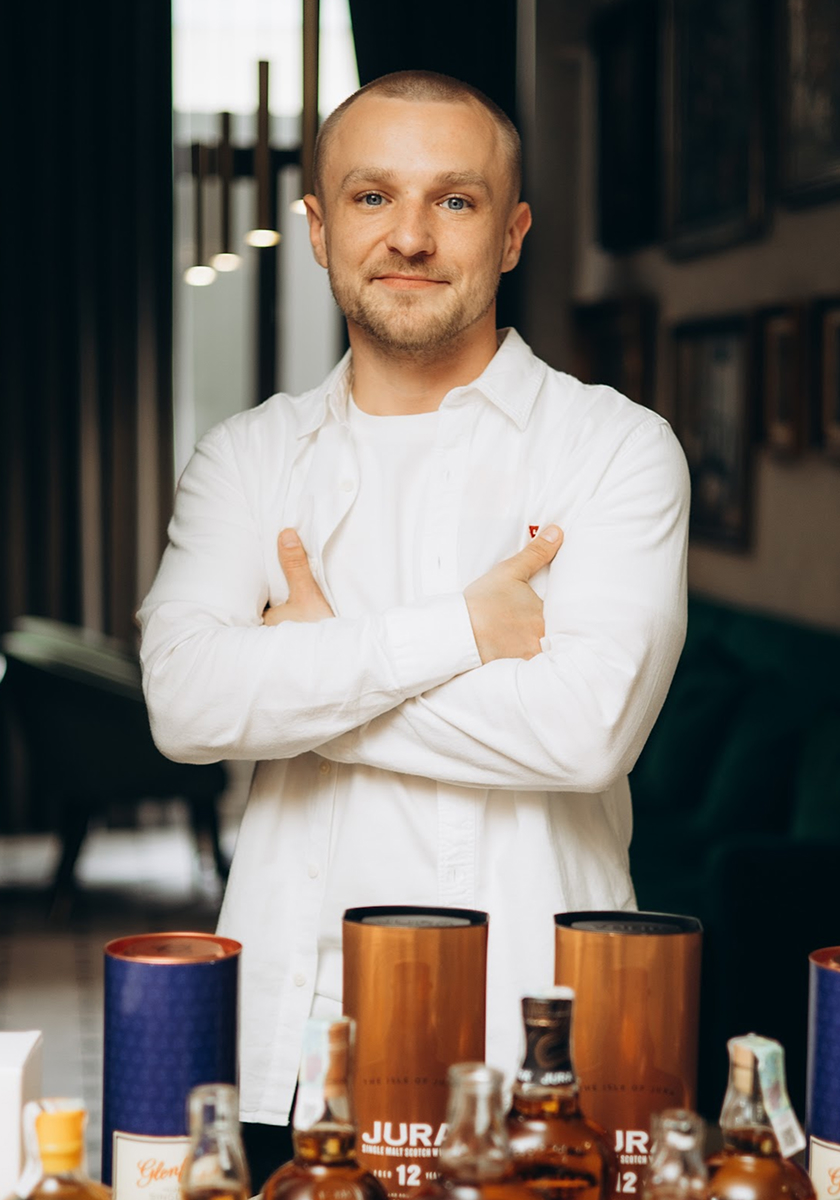
Matthew Tesov
Nice to Meet You!
A sommelier and wine expert with over seven years of experience in the wine industry, founder of Wine Academy, and author of courses that combine professional depth of knowledge with a relaxed, friendly atmosphere. Known simply as Matthew to his friends, he opens the door to the world of wine in such a way that every lecture or tasting becomes an exciting journey through aromas, flavors, and stories.
What YouTube Won’t Teach You: Where to Study to Become a Sommelier and How to Choose the Best Course
Have you decided it’s time to learn about wine? The first thought, of course, is to buy a book or watch a video on YouTube. And that’s a great start for inspiration.
But there’s one caveat. Sommelier is not a profession that can be mastered from a textbook alone. Why? Because wine is, above all, about practice. It is a product that must be experienced with your senses.
No book can convey the aroma of wine in a glass. No video can give you feedback or explain what you are feeling and why.
So in this article, we’ll figure out where to study to become a sommelier and how to ultimately acquire those practical skills.
Where to study to become a sommelier: offline schools vs. online courses

When you start looking for places to study to become a sommelier, you will most likely find two options. Each has its own characteristics.
Offline schools
This is a traditional format, which requires students to attend lectures in person and taste wine together with a group. These include the international certification programs Wine & Spirit Education Trust and Court of Master Sommeliers. Among Ukrainian institutions, we would like to highlight the approach of the London-based Wine & Spirit Education Trust business school.
The main advantage of such schools is personal contact, networking, and an excellent long-standing reputation. However, as a rule, they are only available in large cities, which complicates the question of where to study to become a sommelier for residents of other regions. In addition, such institutions are not flexible, as you are tied to a schedule, and they are expensive.
Online courses
The modern approach is, of course, online sommelier courses. This format has appeared recently but has quickly proven its effectiveness. As a rule, such training takes place on a specialized platform.
Where to study to become a sommelier is now a question of your personal schedule, not geography. You can attend classes from anywhere in the world. It is almost always more affordable. In addition, lecturers give clear instructions on how to organize a tasting at home and provide feedback.
How to choose a sommelier course where you can learn professionally
So, you have decided on the format. But how do you choose a specific course now? There are many offers, but not all of them are equally useful.
A good school, online or offline, can always be evaluated according to three criteria:
- The program. It should be systematic, not just a collection of interesting facts about wine. You should see a clear logic: from the basics, such as terroir and varieties, to complex practical skills, such as pairing wine with food.
- Experts. Who teaches you? Are they theorists who simply retell books, or are they practitioners with real experience in purchasing, the restaurant industry, and tastings? This is the second important marker of where sommeliers are taught professionally.
- Practice. Are you just taught to memorize varieties and regions? Or, more valuable, are you taught to analyze and taste wine?
At Matthew Wine & Spirit Academy, we focus on developing your ability to analyze and taste. And it is this approach that we have incorporated into our course “La Dilettante – Wine from Scratch.” It consists of 10 systematic lessons where we combine theory and practice. You will not only receive dry lectures, but also visual materials and specific practical tasks that will help you consolidate your skills.
The full detailed course program is available on our website.
Content: