
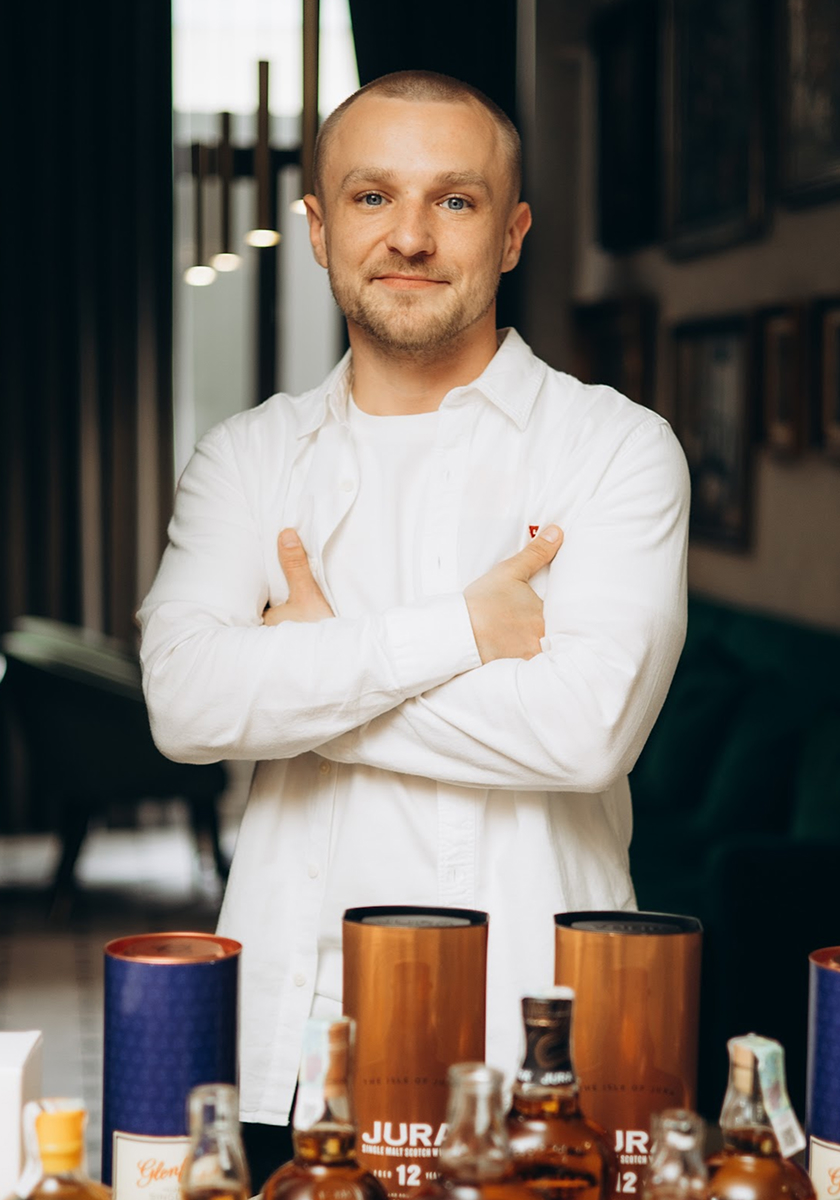
Matthew Tesov
Nice to Meet You!
A sommelier and wine expert with over seven years of experience in the wine industry, founder of Wine Academy, and author of courses that combine professional depth of knowledge with a relaxed, friendly atmosphere. Known simply as Matthew to his friends, he opens the door to the world of wine in such a way that every lecture or tasting becomes an exciting journey through aromas, flavors, and stories.
What Is an Online Wine Tasting and How Does It Work?
The phrase “online tasting” still elicits skeptical smiles from many people.
How is this technically possible? Do you really just have to watch someone else drink? Or is it just dry theory without practice?
Let’s dispel the skepticism. Online wine tasting is not watching YouTube while drinking a glass of wine. It is a full-fledged interactive experience. You get the same emotions and knowledge as in a restaurant, but in the comfort of your own home.
It is a modern learning tool that breaks boundaries. Let’s take a closer look at how it works and why it is becoming so popular.
How it works technically
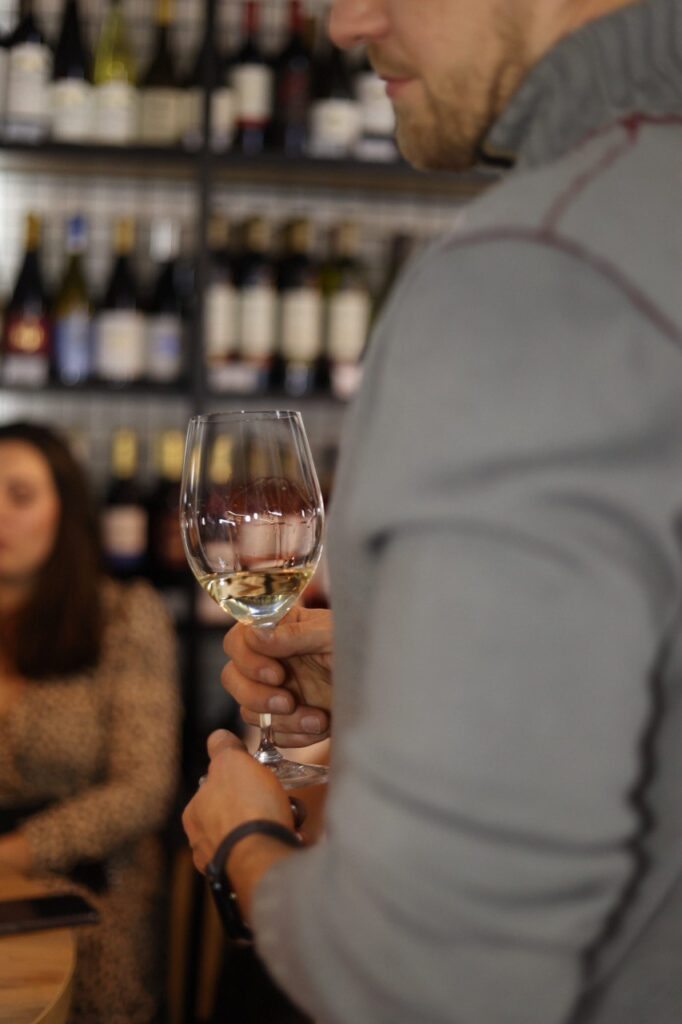
It’s much simpler than it seems. The process can be divided into several stages.
Stage 1. Preparation and purchase
First of all, you receive a list of recommended wines in advance. Your task is to purchase these items in a store.
Unlike a ready-made service in a restaurant, here you work independently. You learn to navigate the alcohol section, find the right variety, region, and vintage. You see real prices and assortment.
Stage 2. Organizing the workplace
For an effective session, you need stable internet and a quiet place. You provide the technical conditions for the tasting yourself:
- Glassware. Prepare clean glasses of the appropriate shape.
- Temperature. Cool the wine to the desired temperature before starting.
- Gastronomy. Prepare snacks if desired.
This teaches you the culture of wine consumption in everyday life.
Stage 3. Conducting the tasting
At the appointed time, participants connect to the broadcast on the platform (e.g., Zoom). The sommelier conducts an organoleptic analysis of the wine. You repeat the expert’s actions and compare your sensations with his description.
The process follows a standard algorithm:
- Visual assessment. Analysis of color, transparency, and brilliance.
- Aroma assessment. Identification of the main aroma groups (fruit, flowers, spices).
- Taste assessment. Analysis of acidity, tannins, body, and aftertaste.
Feedback is provided instantly. You can ask questions by voice or in the chat to clarify details.
Practical advantages of the format

The online format has several rational advantages over offline meetings:
- Sample size. At offline tastings, the standard serving size is 30–50 ml. At home, you are left with an open bottle. You can track the development of the wine in the glass (aeration) over a long period of time.
- Pricing. The cost does not include hall rental and service staff. You pay for information.
- Group learning. One bottle can be tasted by two people or a group. This reduces the cost of participation per person.
Conclusion
Online tasting is a tool for gaining systematic knowledge. You learn to analyze the product, draw conclusions, and describe your impressions in professional language.
You can get a complete theoretical foundation and reinforce it in practice in our course. The program is structured from simple to complex. Details and registration at: https://matthewswine.com/course/vinnij-kurs-1/.
Content: