
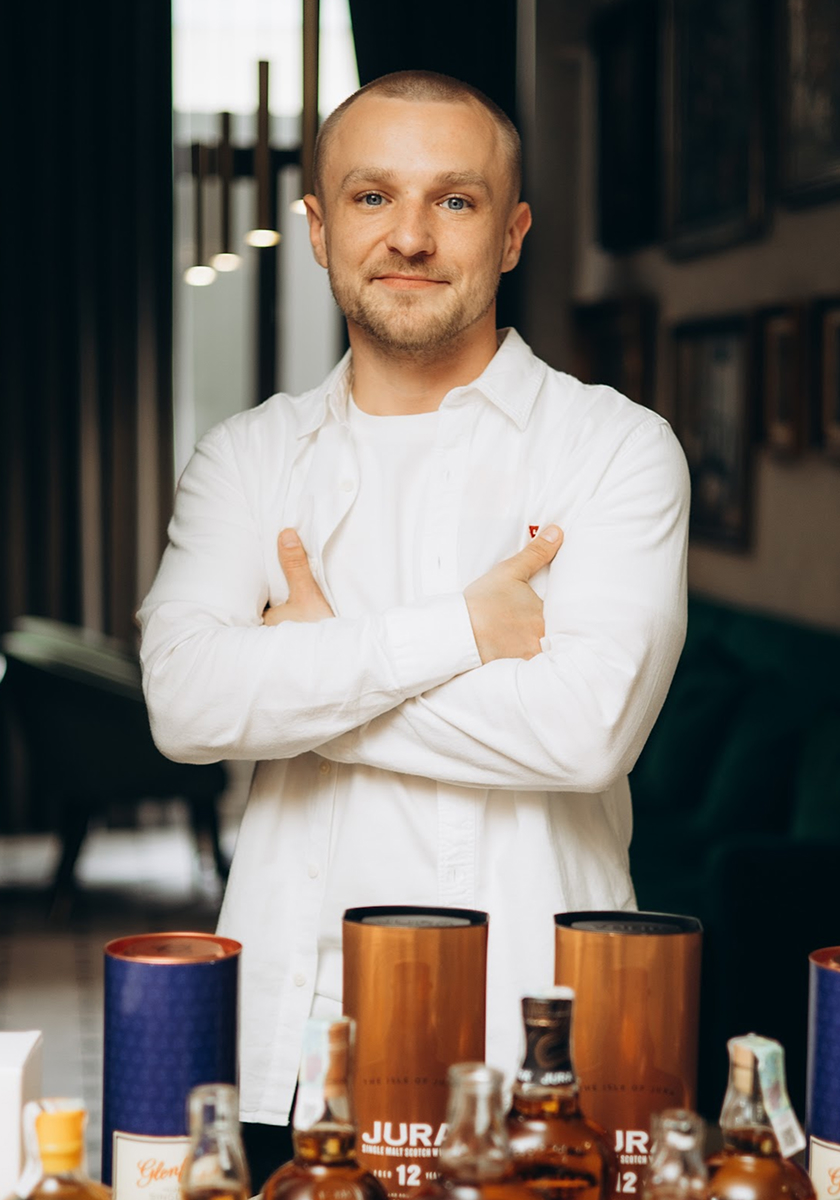
Matthew Tesov
Nice to Meet You!
A sommelier and wine expert with over seven years of experience in the wine industry, founder of Wine Academy, and author of courses that combine professional depth of knowledge with a relaxed, friendly atmosphere. Known simply as Matthew to his friends, he opens the door to the world of wine in such a way that every lecture or tasting becomes an exciting journey through aromas, flavors, and stories.
How to Become a Wine Connoisseur: Where to Start If You Love Wine
Many people confuse the professions of sommelier and caviste. It may seem that these are simply different names for the same job. However, the difference between a sommelier and a caviste is significant. A sommelier works in a restaurant: they are responsible for service, serving drinks, and pairing wine with food. A caviste is a specialist in a wine boutique. They help choose wine for dinner, a gift, or a private collection.
What a caviste needs to know
Simply loving wine is not enough for this job. A caviste has to be a psychologist, an encyclopedia, and a brilliant salesperson all at once.
You need to understand a person’s tastes within just a few minutes, even when they do not always know exactly what they want themselves. A customer may ask you to choose something not too acidic for fish or find a delicious red wine as a gift for their manager.
This is where real expertise shows itself. A specialist has to keep hundreds of positions in mind, know the specifics of vintages, and understand how pricing works. But the main goal is not to sell the most expensive bottle. It is to find the wine with the best value for money for a specific request.
First steps toward a new profession
The path to a dream job begins with a foundation: knowledge, practice, and useful habits. Here is what you should gradually add to your life:
- Taste consciously. Stop drinking wine just for the sake of it. Start a special notebook and write down your impressions of every new bottle. Try to break down the aroma into components and evaluate the level of acidity.
- Read labels. Pay attention to regions, grape varieties, and producers. You need to understand the difference between Chablis and a regular New World Chardonnay.
- Talk to professionals. Attend open tastings, ask experts questions, and listen carefully to their comments.
Do not be afraid to start your career as a regular assistant in a good specialized store. Working with shelves and stock gives you incredible visual memory of labels and an understanding of how the assortment is formed.
Where to start today
Self-education is important, but it is often not enough. Information on the internet can be chaotic, contradictory, or already outdated. To grow faster in the profession and close gaps in your knowledge, it is worth investing in quality training.
Systematic education at a wine school will help you properly structure your knowledge of regions, key grape varieties, and the subtleties of production technology. You will gain a professional foundation that will allow you to communicate confidently even with the most demanding clients.
Working as a caviste requires constant development, because the world of wine is absolutely endless.
Content: