

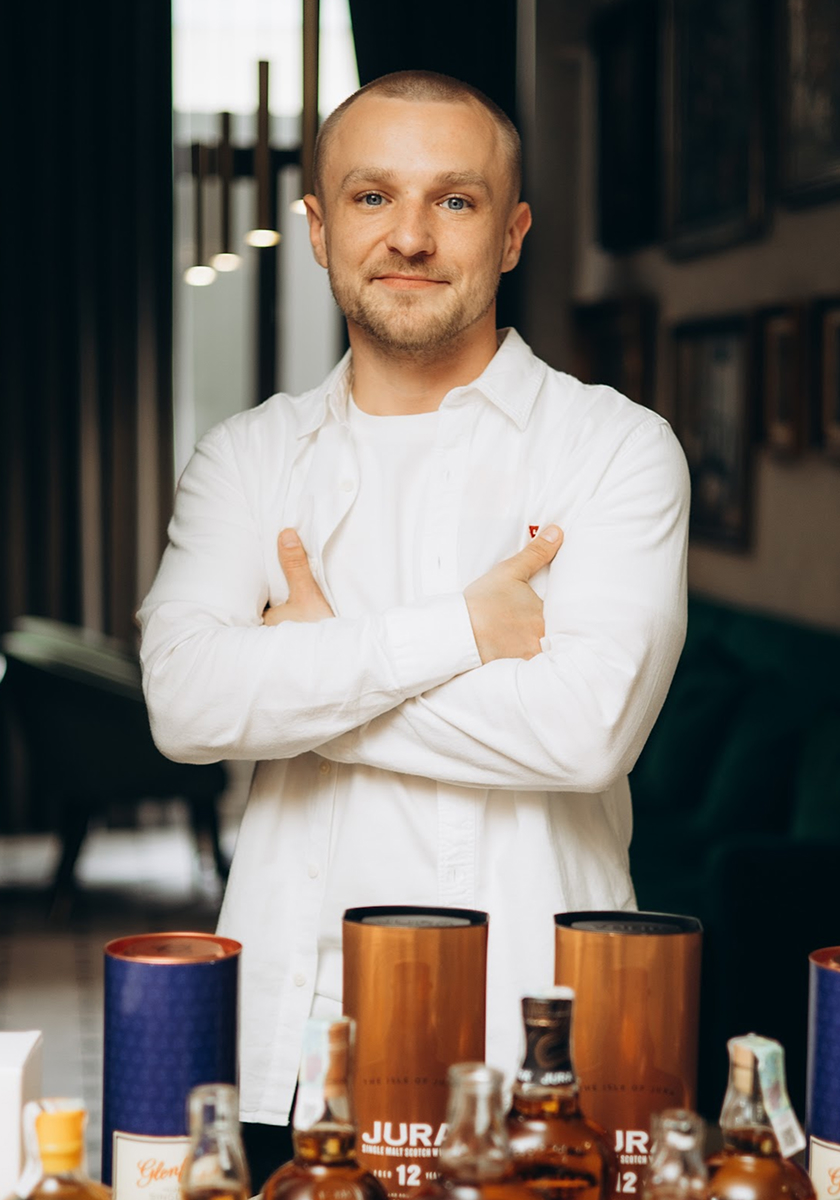
Matthew Tesov
Nice to Meet You!
A sommelier and wine expert with over seven years of experience in the wine industry, founder of Wine Academy, and author of courses that combine professional depth of knowledge with a relaxed, friendly atmosphere. Known simply as Matthew to his friends, he opens the door to the world of wine in such a way that every lecture or tasting becomes an exciting journey through aromas, flavors, and stories.
Do You Need to Have a “Special Palate” to Train as a Sommelier?
Most people who think about sommelier training for the first time ask the same question. They phrase it in different ways, but the meaning is always the same: “What if my taste is not sensitive enough?” This question may sound modest, but behind it lies a whole set of myths that stop people before they even take the first step. It is time to deal with each of them.
Myth #1. Sommeliers are born with special abilities
The most common misconception sounds something like this: professional tasters have an inborn gift for distinguishing tastes and aromas that ordinary people simply cannot access. It sounds convincing. And it completely contradicts scientific data.

Studies in sensory physiology show that the number of taste receptors does vary from person to person. Around 25% of the population are so-called “supertasters”, meaning they have increased sensitivity to bitterness.
But here is the interesting part: among professional sommeliers, this percentage is no higher than in the general population. Moreover, hypersensitivity to bitterness often gets in the way rather than helps, because some wine styles with pronounced tannins or oak notes may seem unpleasant to such people.
The ability to distinguish aromas in wine is not a gift, but a skill. And this skill can be trained in the same way as learning to play a musical instrument.
Myth #2. If you do not understand wine now, it is too late to learn
Another popular belief is that you need to come to training already prepared.

In practice, it works exactly the opposite way. People who start with zero background often progress faster than those who “already know everything”. The reason is simple: they do not have incorrect habits or fixed stereotypes that later need to be unlearned.
Starting from zero is not a disadvantage. It is an honest position – and almost every professional in this field started from exactly the same place.
Myth #3. You either have good taste or you do not
This is probably the most persistent myth because it sounds like common sense. After all, some people really do seem to “feel” wine better than others. So does that mean some people have the ability and others do not?

Here it is important to separate two completely different concepts. Sensory sensitivity is the physiological ability to perceive tastes and aromas. Tasting skill is the ability to interpret, describe, and classify what you perceive. The first is roughly similar for most people. The second depends entirely on practice and education.
What actually matters in sommelier training
If we remove the myths, we are left with a list of qualities that truly help in this field. Spoiler: none of them is an inborn gift.
- Curiosity. Genuine interest helps you absorb the material faster than any talent.
- Regular practice. One hundred simple wines studied consciously will teach you more than one rare bottle tasted without attention.
- The ability to describe sensations. Train yourself to answer the question honestly: “What does this remind me of?”, based on your own real experience.
- A systematic approach. Winemaking combines geography, chemistry, history, and gastronomy. The best results come to those who see this huge amount of information as a fascinating puzzle, not as a difficult exam.
If you can tell sweet from sour, warm from cold, and notice the difference between a fresh and not-so-fresh product, you already have everything you need to start. The rest is a matter of learning, time, and practice.
You can learn more about how sommelier training works in practice on our website. There, you will also find information about programs, formats, and first steps for those who are just starting to explore this topic.
Content: