

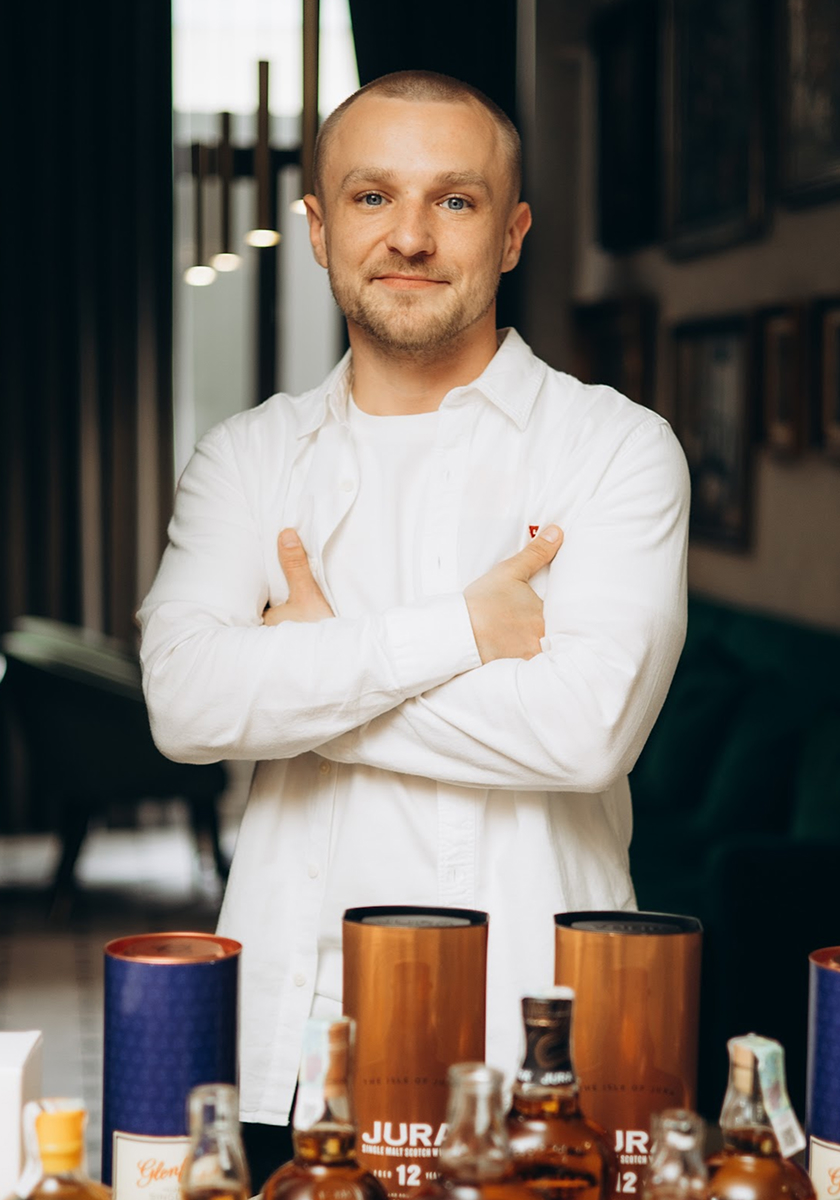
Matthew Tesov
Nice to Meet You!
A sommelier and wine expert with over seven years of experience in the wine industry, founder of Wine Academy, and author of courses that combine professional depth of knowledge with a relaxed, friendly atmosphere. Known simply as Matthew to his friends, he opens the door to the world of wine in such a way that every lecture or tasting becomes an exciting journey through aromas, flavors, and stories.
What Skills Are Needed to Become a Sommelier: From Sensory Perception to Management
The profession of sommelier is often shrouded in romance. It seems to be all about tastings, travel, and beautiful evenings.
It is indeed a fascinating world. But behind the beautiful picture lies serious work. A sommelier is a universal soldier. You have to be an expert, a psychologist, and a businessman all at once.
To be successful, you need to develop four key skill sets. Let’s take a closer look at them.
Developed sensory perception and taste memory
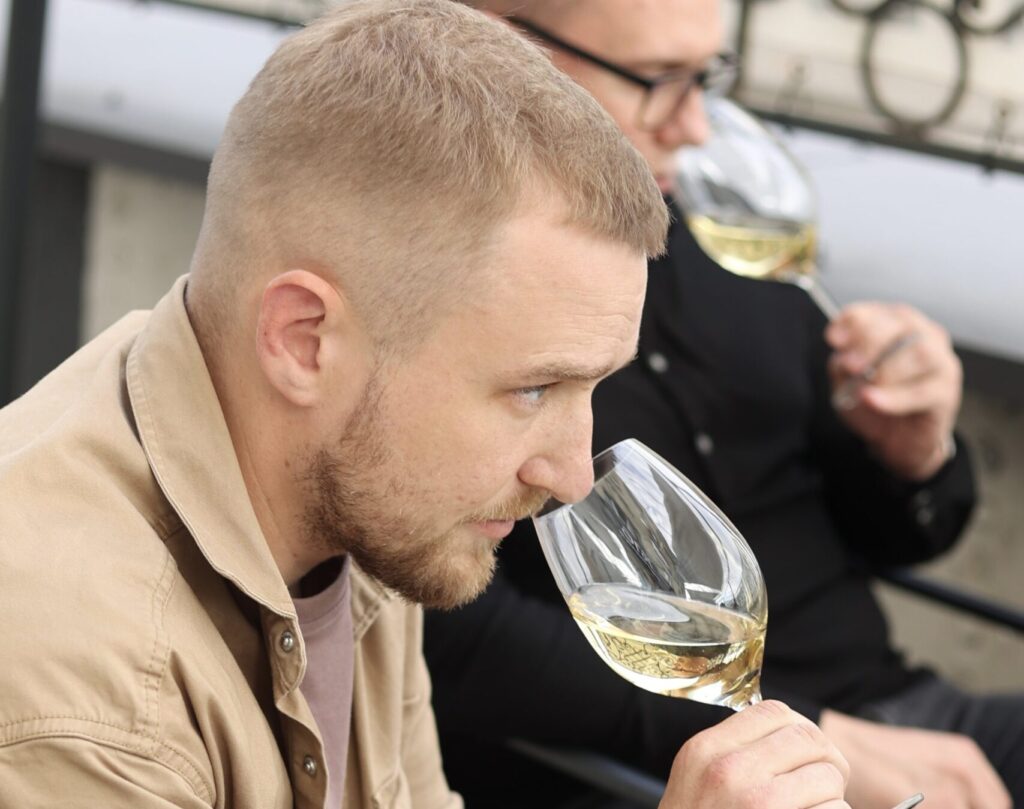
A sommelier must have a keen sense of smell and taste. This is the foundation of the profession. Without it, it is impossible to work.
You need to do more than just drink wine. You need to break it down into its components. Where are the notes of ripe cherries, and where are the hints of oak? What is the acidity like?
The good news is that this is not always an innate gift. Your sense of smell and taste can be trained, just like muscles in the gym. All you need is regular practice.
Deep theoretical knowledge
Wine is geography, history, and biology in one glass. Wine theory includes:
- Geography and terroir. You need to know the climate of Bordeaux and the soils of Tuscany. Understand how the weather affects the taste in the glass.
- Production technology. How is sparkling wine made? How does aging in oak differ from aging in steel? You need to know the whole process: from the vine to the bottle.
- Enogastronomy. This is the art of pairing wine and food. You need to know what to serve with oysters and what to serve with steak. The perfect pairing enhances the taste of both products.
- Legislation. You need to understand how to read labels from different countries and what different classifications guarantee.
Service skills and psychology

A sommelier works primarily with people, not bottles. Therefore, communication skills are the key to success.
It is important to be able to listen to guests. Understand their mood and needs. Explain complex things in simple terms. Without complex terminology and arrogance.
You have to “read” the guest in a minute. Someone wants a lecture on wine. Someone wants silence. Someone wants to impress their companion. The approach to each is different.
Wine should unite and bring joy. And the sommelier’s job is to make the choice easy and enjoyable for the customer.
Management and economics
This is the side of the profession that beginners often forget about. A sommelier is also a manager.
You are responsible for compiling the wine list. It must be balanced and interesting. You need to balance between bestsellers and unique items. You work with suppliers and control purchases.
You also keep track of stock levels. Wine is the restaurant’s money. Therefore, the ability to calculate and plan a budget is essential here.
Desire to learn
The profession of sommelier is one of constant development. It is impossible to learn everything once and for all. The world of wine is changing, and you change with it.
It seems that mastering such a volume of knowledge is difficult. But the secret is in the right structure. It is not necessary to spend years searching for the truth on your own. All these skills, from training your nose to compiling a wine list, are covered in detail in our program. This is the shortest path from beginner to pro. Go to the “La Dilettante – Wine from Scratch” course page of our sommelier school and start your journey into the world of wine with confidence.
Content: